Search Result
Results for "
ubiquitin-proteasome pathway
" in MedChemExpress (MCE) Product Catalog:
| Cat. No. |
Product Name |
Target |
Research Areas |
Chemical Structure |
-
- HY-111876
-
|
|
SNIPERs
|
Cancer
|
|
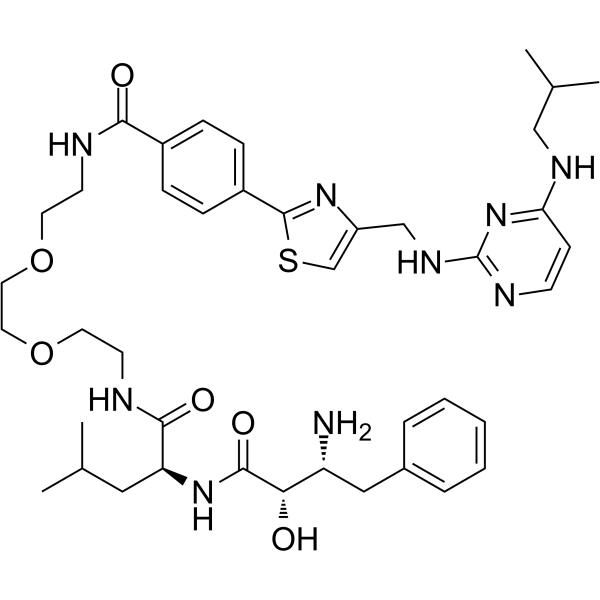
SNIPER(TACC3)-1 targets the TACC3 protein for degradation via the ubiquitin-proteasome pathway based on IAP ligand. SNIPER(TACC3)-1 induces cancer cell death .
|
-
-
- HY-141432
-
|
Cbl-b-IN-3
|
E1/E2/E3 Enzyme
|
Cancer
|
|
NX-1607 (Compound 23) is an inhibitor of Cbl-b, an E3 enzyme in the ubiquitin-proteasome pathway, with an IC50 value of less than 1 nM. NX-1607 can be used in cancer research .
|
-

-
- HY-111877
-
|
|
SNIPERs
|
Cancer
|
|
SNIPER(TACC3)-2 targets the TACC3 protein for degradation via the ubiquitin-proteasome pathway based on IAP ligand. SNIPER(TACC3)-2 induces cancer cell death .
|
-

-
- HY-19726
-
|
|
MDM-2/p53
|
Cancer
|
|
NSC59984 induces mutant p53 protein degradation via MDM2 and the ubiquitin-proteasome pathway . NSC59984 acts by targeting GOF-mutant p53 and stimulates p73 to restore the p53 pathway signaling .
|
-

-
- HY-N7695
-
|
|
Apoptosis
Autophagy
|
Cancer
|
|
Physalin B, one of the major active steroidal constituents of Cape gooseberry, induces cell cycle arrest and triggers apoptosis in breast cancer cells through modulating p53-dependent apoptotic pathway. Physalin B inhibits the ubiquitin-proteasome pathway and induces incomplete autophagic response in human colon cancer cells in vitro .
|
-

-
- HY-179562
-
|
|
Btk
|
Cancer
|
|
BTK degrader-2 (Example 2) is a BTK dual-functional degrading agent, which causes the degradation of BTK through the ubiquitin-proteasome pathway. BTK degrader-2 can be used for the study of B-cell-related diseases .
|
-

-
- HY-157230
-
|
|
IAP
|
Cancer
|
|
XIAP antagonist 1 degrades rather than inhibits XIAP, catalyzing rapid degradation of XIAP through the ubiquitin-proteasome pathway [2].
|
-

-
- HY-111876A
-
|
|
SNIPERs
|
Cancer
|
|
SNIPERTACC3-1 hydrochloride targets the TACC3 protein for degradation via the ubiquitin-proteasome pathway based on IAP ligand. SNIPERTACC3-1 hydrochloride induces cancer cell death .
|
-

-
- HY-111877A
-
|
|
SNIPERs
|
Cancer
|
|
SNIPER(TACC3)-2 hydrochloride targets the TACC3 protein for degradation via the ubiquitin-proteasome pathway based on IAP ligand. SNIPER(TACC3)-2 hydrochloride induces cancer cell death .
|
-

-
- HY-177783
-
|
|
Molecular Glues
Indoleamine 2,3-Dioxygenase (IDO)
|
Cancer
|
|
iDeg-1 is a molecular glucose degrading agent that targets the IDO1 protein. iDeg-1 relies on the ubiquitin-proteasome degradation pathway mediated by its natural E3 ligase KLHDC3. iDeg-1 can be used for cancer research .
|
-

-
- HY-179035
-
|
|
Molecular Glues
CXCR
|
Cancer
|
|
TBS6b is a potent and selective ACKR3 molecular glue degrader. TBS6b degrades ACKR3 via the ubiquitin-proteasome pathway. TBS6b inhibits hepatocellular carcinoma cell proliferation, migration, and invasion. TBS6b is relevant to hepatocellular carcinoma (HCC) research .
|
-

-
- HY-172595
-
|
|
Apoptosis
E1/E2/E3 Enzyme
|
Cancer
|
|
Apoptosis inducer 48 (5d) is an apoptotic agent. Apoptosis inducer 48 inhibits the growth of triple-negative breast cancer cells. Apoptosis inducer 48 attenuates proteasomal degradation via the ubiquitin-proteasome pathway, leading to G2/M phase cell cycle arrest and the induction of apoptotic .
|
-

-
- HY-173002
-
|
|
DNA Methyltransferase
|
Cancer
|
|
MS9024 is the degrader for DNA methyltransferase 1 that degrades DNMT1 in cell HCT116 through the ubiquitin-proteasome pathway with a DC50 of 35 nM (DC50 in MDA-MB-468 and H1299 is 254 nM and 101 nM). MS9024 also inhibits DNMT1 with an IC50 of 0.43 μM .
|
-

-
- HY-157788
-
|
|
PROTACs
Reactive Oxygen Species (ROS)
Ferroptosis
Glutathione Peroxidase
|
Cancer
|
|
ZX703 (compound 5I) is a PROTAC that significantly degrades GPX4 in a dose- and time-dependent manner through the ubiquitin-proteasome and autophagy-lysosome pathways (DC50=0.315 µM). ZX703 induces ferroptosis by inducing Reactive Oxygen Species (ROS) accumulation in cells. ZX703 can be used for cancer research .
|
-

-
- HY-147942
-
|
|
PROTACs
EGFR
|
Cancer
|
|
MS9449 is a potent PROTAC EGFR degrader with Kds of 17 nM and 10 nM for EGFR WT and EGFR L858R, respectively. MS9449 effectively induces degradation of mutant EGFRs through both the ubiquitin/proteasome system (UPS) and autophagy/lysosome pathways. MS9449 potently inhibits the proliferation of NSCLC cells. MS9449 can be used for researching anticancer .
|
-

-
- HY-147941
-
|
|
PROTACs
EGFR
|
Cancer
|
|
MS9427 is a potent PROTAC EGFR degrader with Kds of 7.1 nM and 4.3 nM for EGFR WT and EGFR L858R, respectively. MS9427 selectively degrades the mutant but not the WT EGFR through both the ubiquitin/proteasome system (UPS) and autophagy/lysosome pathways. MS9427 potently inhibits the proliferation of NSCLC cells. MS9427 can be used for researching anticancer .
|
-

-
- HY-P1259
-
|
|
Proteasome
Bacterial
|
Inflammation/Immunology
|
|
PR-39, a natural proline- and arginine-rich antibacterial peptide, is a noncompetitive, reversible and allosteric proteasome inhibitor. PR-39 reversibly binds to the α7 subunit of the proteasome and blocks degradation of NF-κB inhibitor IκBα by the ubiquitin-proteasome pathway. PR-39 stimulates angiogenesis, inhibits inflammatory responses and significant reduces myocardial infarct size in mice .
|
-

-
- HY-152134
-
|
|
HDAC
PROTACs
|
Cancer
|
|
HDAC6 degrader-3 is a potent and selective HDAC6 degrader via ternary complex formation and the ubiquitin-proteasome pathway with a DC50 value of 19.4 nM. HDAC6 degrader-3 has IC50s of 4.54 nM and 0.647 μM for HDAC6 and HDAC1, respectively. HDAC6 degrader-3 causes strong hyperacetylation of α-tubulin .
|
-

-
- HY-147941A
-
|
|
PROTACs
EGFR
|
Cancer
|
|
MS9427 TFA is a potent PROTAC EGFR degrader with Kds of 7.1 nM and 4.3 nM for EGFR WT and EGFR L858R, respectively. MS9427 TFA selectively degrades the mutant but not the WT EGFR through both the ubiquitin/proteasome system (UPS) and autophagy/lysosome pathways. MS9427 TFA potently inhibits the proliferation of NSCLC cells. MS9427 TFA can be used for researching anticancer .
|
-

-
- HY-P1259A
-
|
|
Proteasome
Bacterial
|
Inflammation/Immunology
|
|
PR-39 TFA, a natural proline- and arginine-rich antibacterial peptide, is a noncompetitive, reversible and allosteric proteasome inhibitor. PR-39 TFAreversibly binds to the α7 subunit of the proteasome and blocks degradation of NF-κB inhibitor IκBα by the ubiquitin-proteasome pathway. PR-39 TFA stimulates angiogenesis, inhibits inflammatory responses and significant reduces myocardial infarct size in mice .
|
-

-
- HY-144983
-
|
|
Ligands for E3 Ligase
|
Cancer
|
|
E3 ligase Ligand 22 (compound 139) is a cereblon binder for the degradation of Ikaros or Aiolos by the ubiquitin proteasome pathway .
|
-

-
- HY-144980
-
|
|
Ligands for E3 Ligase
|
Cancer
|
|
E3 ligase Ligand 21 (compound 2) is a cereblon binder for the degradation of Ikaros or Aiolos by the ubiquitin proteasome pathway .
|
-

-
- HY-144985
-
|
|
Ligands for E3 Ligase
|
Cancer
|
|
E3 ligase Ligand 23 (compound 17-6) is a cereblon binder for the degradation of Ikaros or Aiolos by the ubiquitin proteasome pathway .
|
-

-
- HY-158331
-
|
|
PROTACs
Epigenetic Reader Domain
Apoptosis
|
Cancer
|
|
Gal-ARV-771, PROTAC prodrug, is a gal modified ARV-771 (HY-100972). Gal-ARV-771 can be activated in SA-β-Gal-expressed cancer senescent cells to release ARV-771. Gal-ARV-771 induces selective degradation of BRD4 protein by the ubiquitin-proteasome pathway in senescent cells. Gal-ARV-771 promotes apoptosis of senescent cancer cells .
|
-

-
- HY-153896
-
|
|
c-Met/HGFR
|
Cancer
|
|
LMTK3-IN-1 (compound C28) is an ATP-competitive inhibitor of lemur tyrosine kinase 3 (LMTK3) (Kd=2.5 μM),that acts by degrading LMTK3 via the ubiquitin-proteasome pathway. LMTK3-IN-1 shows anticancer activity in a variety of cancer cell lines and in vivo BC mouse models. LMTK3-IN-1 induces apoptosis in BC cell lines at 10-20 μM .
|
-

-
- HY-136242
-
|
|
Estrogen Receptor/ERR
|
Endocrinology
Cancer
|
|
UT-34 is a potent, selective, orally bioactive second-generation pan-androgen receptor (AR) antagonist and degrader, with IC50 values of 211.7 nM, 262.4 nM, and 215.7 nM for wild-type AR, F876L-AR, and W741L-AR, respectively. UT-34 binds to the ligand-binding domain (LBD) and functional 1 (AF-1) domain of AR and requires the ubiquitin-proteasome pathway for AR degradation. UT-34 has anti-prostate cancer effects.
|
-

-
- HY-170951
-
|
|
Androgen Receptor
|
Cancer
|
AR antagonist 10 (Compound Y5) is potent and orally active androgen receptor (AR) antagonist with an IC50 of 0.04 μM. AR antagonist 10 demonstrates dual mechanisms of action, antagonizes AR by disrupting AR dimerization, and induces AR degradation via the ubiquitin-proteasome pathway. AR antagonist 10 exhibits excellent activity against variant drug-resistant AR mutants. AR antagonist 10 effectively suppresses the tumor growth of the LNCaP xenograft. AR antagonist 10 is potential to be used for drug-resistant prostate cancer .
|
-

-
- HY-168274
-
|
|
PROTACs
Apoptosis
|
Cancer
|
|
PROTAC TRIB2 degrader-1 (Compound 5k) is an effective TRIB2 degrader that selectively induces TRIB2 degradation through the CRBN-dependent ubiquitin-proteasome pathway. PROTAC TRIB2 degrader-1 can inhibit cell proliferation and induce cell apoptosis, and can be used in cancer research. (Target protein ligand (Pink): HY-168275; linker (black): HY-168276; E3 Ligase Ligand-Linker Conjugates: HY-168277; E3 ligase (Blue): HY-W023573) .
|
-

-
- HY-174862
-
|
|
PROTACs
ASK1
|
Inflammation/Immunology
|
|
dASK1 is a selective and cereblon (CRBN)-based PROTAC degrader of apoptosis signal-regulating kinase 1 (ASK1). dASK1 forms a stable ternary complex with ASK1, facilitating ASK1 rapid and sustained degradation via the ubiquitin-proteasome pathway. dASK1 demonstrates potent ASK1 degradation. dASK1 can be used for the research of steatohepatitis . (Structure Note: Pink: ASK1 ligand (HY-174860); Blue: CRBN ligand (HY-10984); Black: linker; E3-linker (HY-174863))
|
-

-
- HY-149127
-
|
ASC-JM17; ALZ-003
|
Keap1-Nrf2
Androgen Receptor
HSP
Mitophagy
|
Metabolic Disease
|
|
Rosolutamide (ASC-JM17), a curcumin analog, is an orally active, potent Nrf1 and Nrf2 activator. Rosolutamide activates Nrf1, Nrf2 and heat shock factor 1 (Hsf1), thereby activating the expression of proteasome subunits, antioxidant enzymes and molecular chaperones. Rosolutamide degrades the polyglutamine (polyQ) androgen receptor (AR) via the ubiquitin-proteasome pathway and improves motor function in mouse models of spinal and bulbar muscular atrophy (SBMA). Rosolutamide improves mitochondrial function and promotes autophagy, decreases mutant protein aggregates, and attenuates intracellular/mitochondrial reactive oxygen species (ROS) levels .
|
-

-
- HY-173414
-
|
|
PROTACs
STING
NF-κB
|
Inflammation/Immunology
|
|
PROTAC STING degrader-3 (Compound ST9) is a STING PROTAC degrader (DC50: 0.62 μM). PROTAC STING degrader-3 induces STING degradation via the ubiquitin-proteasome pathway. PROTAC STING degrader-3 exerts anti-inflammatory effects by inhibiting STING/TBK1/NF-κB signaling. PROTAC STING degrader-3 has renal protective effects and can be used in the study of acute kidney injury (AKI) (Pink: STING ligand (HY-47709); Blue: E3 ligase CRBN ligand (HY-41547); Black: linker) .
|
-

-
- HY-161180
-
|
|
NAMPT
|
Cancer
|
|
Antitumor Agent-136 (Compound 17) is a potent broad-spectrum antitumor agent and a NAMPT inhibitor with an IC50 of 9.5 nM. Antitumor Agent-136 can reduce the levels of intracellular and extracellular NAMPT protein through the ubiquitin proteasome pathway, thus achieving tumor inhibition .
|
-

-
- HY-175764
-
|
|
PROTACs
IRAK
NF-κB
p38 MAPK
TNF Receptor
Interleukin Related
|
Inflammation/Immunology
|
|
FIP22 is a potent and selective IRAK4 PROTAC degrader (HEK293T cells: DC50 = 3.2 nM; THP-1 cells: DC50 = 10.6 nM). FIP22 induces the ubiquitin-proteasome system by forming an IRAK4-FIP22-CRBN ternary complex (EC50 = 12.63 nM), thereby potently blocking IRAK4-mediated NF-κB and MAPK signaling pathways. FIP22 can be used for the study of atopic dermatitis (Pink: IRAK4 ligand (HY-175765); Blue: CRBN ligand (HY-W087383); Black: Linker (HY-46871)) .
|
-

-
- HY-160864
-
|
HWA 448
|
Phosphodiesterase (PDE)
|
Cancer
|
|
Torbafylline is a PDE inhibitor. Torbafylline mitigates protein breakdown in rat skeletal muscle following burns by activating the PDE4/cAMP/EPAC/PI3K/Akt signaling pathway. Torbafylline suppresses the increased ubiquitin-proteasome-dependent protein degradation observed in the skeletal muscles of rats susceptible to cancer and sepsis .
|
-

-
- HY-175527
-
|
|
PROTACs
Anaplastic lymphoma kinase (ALK)
Apoptosis
|
Cancer
|
|
ALK degrader 2 is an orally active ALK degrader that degrades EML4-ALK levels (DC50 = 8 nM) and nucleophosmin (NPM)-ALK protein levels (DC50 = 102 nM). ALK degrader 2 mediates ALK degradation via the Hsp70 chaperone system and ubiquitin-proteasome pathway. ALK degrader 2 induces significant S-phase cell cycle arrest and apoptosis in H3122 cells. ALK degrader 2 shows anti-tumor activity in mice bearing H3122 xenografts. ALK degrader 2 can be used for the study of non-small cell lung cancer (NSCLC). (Pink: ALK ligand (HY-W754809), Blue: Hyt (HY-W013021), Black: Linker (HY-Y1760), ALK ligand-linker conjugate (HY-175528)) .
|
-

-
- HY-178938
-
|
|
Molecular Glues
Androgen Receptor
Caspase
Apoptosis
|
Endocrinology
Cancer
|
AR Degrader-3 is an orally active molecular glue that targets AR/ARV7 and induces the degradation of AR and ARV7 through the ubiquitin-proteasome pathway (UPP). AR Degrader-3 directly interacts with the ligand-binding domain (LBD) and the N-terminal domain (NTD) of AR. AR Degrader-3 effectively suppresses the transcriptional activity of wild-type AR (AR-WT), AR mutants, and ARV7. AR Degrader-3 downregulates the mRNA and protein levels of downstream AR target genes, thereby overcoming antiandrogen resistance mediated by ARV7 and AR point mutations. AR Degrader-3 induces apoptosis in Enzalutamide (HY-70002) (ENZa)-resistant cells and increases cleaved caspase-3 protein levels. AR Degrader-3 can be used for the study of castration-resistant prostate cancer (CRPC) .
|
-

-
- HY-168996
-
|
|
CDK
Apoptosis
|
Cancer
|
|
LA-CB1 is an Abemaciclib (HY-16297A) derivative that targets CDK4/6 and promotes its degradation via the ubiquitin-proteasome pathway, thereby disrupting the CDK4/6-Cyclin D1-Rb-E2F axis and inducing G0/G1 cell cycle arrest and apoptosis. LA-CB1 exhibits antiproliferative activity against MDA-MB-231 cells, with an IC50 of 0.27 µM, and effectively inhibits epithelial-mesenchymal transition (EMT), cell migration, invasion, and angiogenesis. In highly aggressive models such as triple-negative breast cancer (TNBC), LA-CB1 significantly suppresses tumor growth in a dose-dependent manner. LA-CB1 holds potential for research in the field of breast cancer .
|
-

-
- HY-175236
-
|
|
PD-1/PD-L1
Apoptosis
ERK
JNK
Cadherin
p38 MAPK
GSK-3
IFNAR
Caspase
Bcl-2 Family
|
Cancer
|
|
SF-9-2 is a PD-L1/PD-1 binding inhibitor (IC50 = 24.9 nM). SF-9-2 inhibits epithelial-mesenchymal transition, migration, invasion, and proliferation of SK-N-SH cells, and also induces apoptosis and cell cycle arrest. SF-9-2 blocks PD-L1-induced SK-N-SH cell growth through the MAPK signaling pathway. SF-9-2 restores GSK-3β activity and enhances PD-L1 degradation through the ubiquitin-proteasome pathway. SF-9-2 inhibits tumor growth in the SK-N-SH NOG mouse model without significant toxicity. SF-9-2 also acts as an immune checkpoint inhibitor, blocking PD-L1 to restore T cell function. SF-9-2 can be used in neuroblastoma research .
|
-

-
- HY-141431
-
|
|
E1/E2/E3 Enzyme
|
Inflammation/Immunology
Cancer
|
|
Cbl-b-IN-2 (Example 8) is an orally bioavailable compound, can inhibit the E3 enzyme Casitas B-lineage lymphoma proto-oncogene-b (Cbl-b) in the ubiquitin proteasome pathway. Cbl-b-IN-2 can be used to modulate the immune system and diseases amenable to immune system modulation. Cbl-b-IN-2 (Example 8) also may be administered to an individual with cancer, either alone or as part of a combination, with one or more of an immune checkpoint inhibitor, an anti-neoplastic agent, and radiation agent .
|
-

-
- HY-158432
-
|
|
Histone Demethylase
PROTACs
|
Cancer
|
|
GT-653 is a PROTAC degrader for lysine-specific demethylase 5B (KDM5B). GT-653 degrades 68.35% KDM5B at 10 μM in a ubiquitin proteasome-dependent manner, upregulates H3K4me3 levels, and activates the type-I interferon signaling pathway in prostate cancer cells 22RV1. (Pink: KDM5B ligand (HY-158433); Black: Linker (HY-W004896); Blue: E3 ligase ligand (HY-103596))
|
-

-
- HY-125834
-
|
|
PROTACs
Bcr-Abl
Apoptosis
STAT
JAK
|
Cancer
|
|
GMB-475 is a potent BCR-ABL1 PROTAC based on Von Hippel-Lindau (VHL). GMB-475 targets the nutmeg pocket of ABL1 in an ectopic manner and degrades BCR-ABL1 protein through the ubiquitin proteasome pathway. GMB-475 inhibits the proliferation of human K562 cells and mouse Ba/F3 cells, and is used for the study of chronic myeloid leukemia. (Blue: VHL ligand (HY-125845); Black: Linker; Pink: BCR-ABL1 ligand (HY-11007)) .
|
-

-
- HY-139996
-
|
|
PROTACs
Apoptosis
FLT3
c-Kit
FGFR
VEGFR
PDGFR
c-Fms
|
Cancer
|
|
Pomalidomide-C5-Dovitinib (compound 2) is a PROTAC containing Pomalidomide, Dovitinib and connected with CRBN. Pomalidomide-C5-Dovitinib shows enhanced antiproliferative effects against FLT3-ITD+ AML cells. Pomalidomide-C5-Dovitinib induces the degradation of the FLT3-ITD and KIT proteins in a ubiquitin-proteasome-dependent manner and completely blocks their downstream signaling pathway. Pomalidomide-C5-Dovitinib has the potential for the research of FLT3-ITD + acute myeloid leukemia .
|
-

-
- HY-175839
-
|
|
PROTACs
EGFR
ATP Synthase
|
Cancer
|
|
PROTAC EGFR degrader 15 is a Pomalidomide (HY-10984)-based Gefitinib (HY-50895) EGFR PROTAC degrader. PROTAC EGFR degrader 15 triggers EGFR degradation via ubiquitin-proteasome-dependent proteolysis and autophagy-lysosome activation pathways. PROTAC EGFR degrader 15 targets ETFA to enhance ATP production. PROTAC EGFR degrader 15 significantly suppresses tumor growth in a Gefitinib-acquired resistant HCC-827 xenograft model. PROTAC EGFR degrader 15 can be used for the study of non-small cell lung cancer (NSCLC) (Pink: EGFR ligand (HY-W109039); Blue: CRBN ligand (HY-10984); Black: Linker (HY-W679737)) .
|
-

-
-
HY-L151
-
|
|
429 compounds
|
|
PROTACs (Proteolysis-targeting chimeras) is a class of molecules that utilize ubiquitin-proteasome system (UPS) to ubiquitinate and degrade target proteins. The PROTACs molecule consists of two ligands joined by a linker. The one-to-one interaction between PROTACs and target proteins determines the high efficiency of PROTACs, making it a potential molecule for targeted protein degradation (TPD) therapy.
MCE supplies a unique collection of 429 PROTACs that effectively degrade target proteins with more powerful screening capability. MCE PROTAC Library is a useful tool for signal pathway research, protein degradation therapy research, drug discovery and drug repurposing, etc.
|
| Cat. No. |
Product Name |
Target |
Research Area |
-
- HY-P1259A
-
|
|
Proteasome
Bacterial
|
Inflammation/Immunology
|
|
PR-39 TFA, a natural proline- and arginine-rich antibacterial peptide, is a noncompetitive, reversible and allosteric proteasome inhibitor. PR-39 TFAreversibly binds to the α7 subunit of the proteasome and blocks degradation of NF-κB inhibitor IκBα by the ubiquitin-proteasome pathway. PR-39 TFA stimulates angiogenesis, inhibits inflammatory responses and significant reduces myocardial infarct size in mice .
|
-
- HY-P1259
-
|
|
Proteasome
Bacterial
|
Inflammation/Immunology
|
|
PR-39, a natural proline- and arginine-rich antibacterial peptide, is a noncompetitive, reversible and allosteric proteasome inhibitor. PR-39 reversibly binds to the α7 subunit of the proteasome and blocks degradation of NF-κB inhibitor IκBα by the ubiquitin-proteasome pathway. PR-39 stimulates angiogenesis, inhibits inflammatory responses and significant reduces myocardial infarct size in mice .
|
| Cat. No. |
Product Name |
Category |
Target |
Chemical Structure |
Your information is safe with us. * Required Fields.
Inquiry Information
- Product Name:
- Cat. No.:
- Quantity:
- MCE Japan Authorized Agent: